
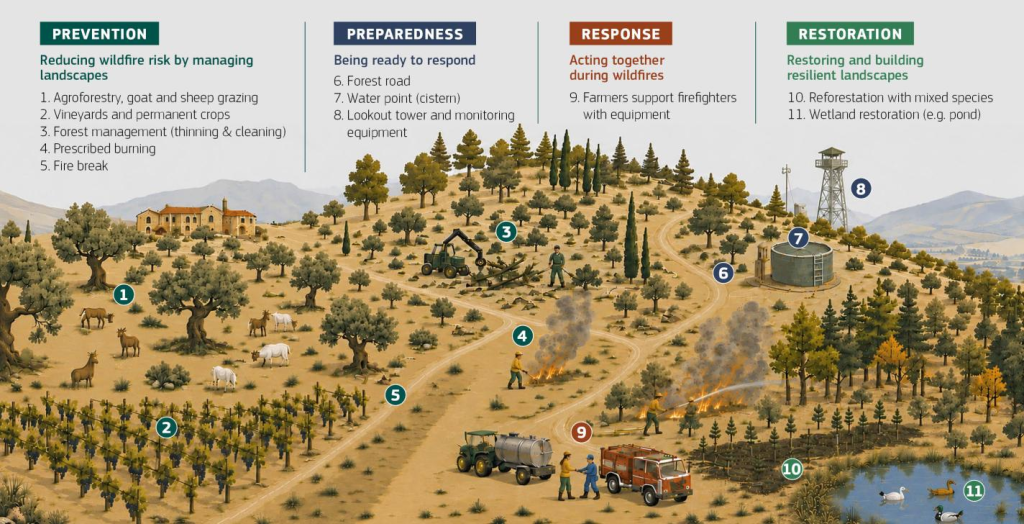
As temperatures rise and wildfires threaten landscapes and communities across Europe, increasing attention is being paid to prevention strategies that can complement conventional firefighting measures.
One approach is managed forest grazing, an agroforestry practice which can help reduce the accumulation of combustible vegetation while contributing to biodiversity positive landscape management. But how can grazing be implemented without compromising animal welfare, wildlife habitats or forest regeneration? And what can European practitioners learn from existing initiatives?
The answers depend on more than the presence of livestock. They require appropriate management, sound ecological knowledge and an understanding of the interactions between animals, forests and people.
Apocalyptic headlines, shocking footage of dust and smoke covering the sky – we have seen it all during the past summer months. Now with the autumn in full swing, the hope that the cooler seasons will regenerate the degraded ecosystems keeps us optimistic. But besides the coverage of displaced individuals, there has been very little attention when it comes to the impact of such devastating natural disasters on wildlife.
When a megafire strikes, wildlife loses both refuge and life. High-intensity canopy fires sterilise soil, destroy nesting trees, and kill slow-moving species. When appropriately planned and managed, forest grazing can reduce fine-fuel accumulation and contribute to lowering wildfire risk, but its success depends on appropriate management and interdisciplinary expertise.
By keeping understory brush low, livestock ensure that if a fire does occur, it remains a low-intensity surface fire. Wildlife can escape, mature trees survive, and the ecosystem recovers in months rather than decades.
Currently, in various countries across Europe, forest grazing remains prohibited or to a large scale restricted. EURAF conducted an analysis of the legal context of forest grazing across the EU, as a reaction to the EU Commission ‘Integrated Wildfire Communication’ published earlier in 2026. Among the main conclusions: national legislation remains largely outdated, not allowing forest grazing as this practice was believed to be destructive for ecosystems, leading to soil compaction, overgrazing or stunting tree growth.
The predator dilemma
When it comes to the interactions between wildlife and livestock, the view is also pretty reductionist. Large predators attack livestock, therefore they should be separated in all cases. This makes sense: yet, this approach disregards the fact that the role of herbivorous animals is essential for healthy forest ecosystems.
The return of large carnivores like wolves across European forests adds another layer of complexity. Simply fencing off forests or keeping livestock permanently indoors avoids the conflict, but leaves the forest floor to turn into a tinderbox. The realistic middle ground requires bringing humans back into the ecosystem. Professional shepherds, equipped with modern virtual fencing, traditional livestock guarding dogs, and night penning, allow livestock to perform their vital ecological role while keeping both herds and wild predators safe.
These legal fears aren’t completely unfounded—unmanaged livestock left unsupervised in woodland can indeed damage young saplings, strip bark, or compact soil. The key lies in the word ‘managed’. Strategic forest grazing relies on precise timing, controlled stocking densities, and animal rotation. It is not about turning herds loose, but about guided, targeted grazing that removes fine fuels without disrupting tree regeneration.
Therefore, the challenge is not simply to bring livestock back into forests, but to understand how grazing can be managed to reduce fire risk while safeguarding animal welfare, biodiversity and long-term forest regeneration.
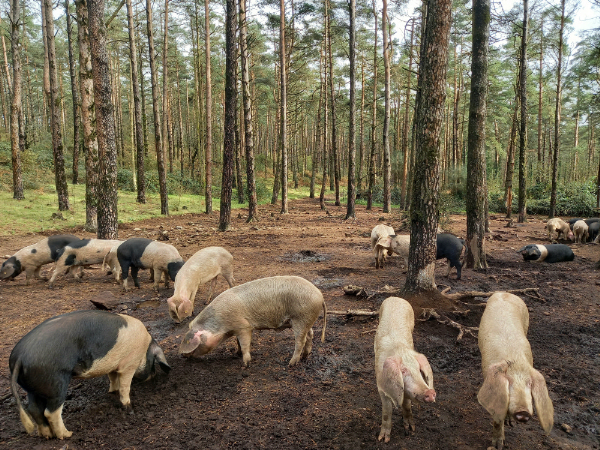
by Azizi, Parisa (2026) https://www.doi.org/10.5281/zenodo.20091496
How grazing brings the forest back to life
Making forest grazing work requires more than putting livestock back into woodlands. It calls for practitioners who understand animal behaviour and welfare, forest ecology, fire prevention, and the practical realities of managing grazing landscapes. Developing this interdisciplinary expertise is one of the challenges that HALE seeks to address.
Far from degrading the forest floor, managed grazing stimulates soil biology. Livestock dung and urine return vital nutrients to the topsoil, creating rich micro-habitats for earthworms, dung beetles, and insect larvae. In turn, these organisms aerate the soil, improve water retention, and form the base of the forest food web—a biological engine that catastrophic megafires completely destroy.
Uniformly dense brush limits light and reduces plant diversity, suppressing bird populations. Controlled forest grazing breaks up thick undergrowth into a structural mosaic. This open canopy landscape offers insectivorous birds clearer flight paths to forage, gives ground-nesting species safe cover near open edges, and preserves old-growth trees where owls and woodpeckers cavity-nest. A varied vegetation structure can create different habitats and foraging opportunities for wildlife, although the effects depend on local ecological conditions and the intensity of grazing.
When it comes to animal welfare, the benefits go far beyond basic shelter. Research by networks like the Irish Agroforestry Forum (IAF) demonstrates that silvopastoral trees act as natural animal health systems. Tree canopies create microclimates that buffer heat stress in summer and raise winter pasture temperatures by several degrees, extending the outdoor grazing season and reducing the stress of indoor confinement. Furthermore, access to “tree fodder”—such as willow or hazel foliage—allows livestock to self-medicate and supplement their diet with deep-mined minerals like zinc and cobalt. Plant tannins in tree leaves even serve as natural anti-parasitics, lowering chemical wormer dependency while supporting healthier gut function.
In Central Europe, the German Agroforestry Association (DeFAF) highlights the critical role of silvopasture in mitigating heat stress and regulating landscape water. DeFAF’s research shows that cattle begin experiencing heat stress at temperatures as low as 20°C when humidity is high; silvopastoral tree canopies reduce ambient temperatures beneath the canopy by up to 6°C, protecting animal metabolic health and milk yields during summer heatwaves. Additionally, deep tree root systems create a “sponge effect” in the soil, enhancing water infiltration so understory vegetation remains hydrated far longer into the dry season—directly delaying the onset of flammable tinder conditions.
Why we need shepherds, not just animals
Ultimately, livestock cannot save forests on their own—they need human partners. Re-introducing forest grazing improves human welfare not only by protecting towns from mass evacuations, but by elevating shepherding into a recognized, socio-ecologically vital profession. Funding active shepherd presence and protective measures transforms pastoralism from a forgotten tradition into an essential frontline defense against climate disaster.
Across the Mediterranean region, several initiatives have developed into well established clusters of good practices, knowledge, and willingness to strengthen resilient landscapes. In Southern Spain, the Red de Áreas Pasto-Cortafuegos de Andalucía pays over 200 local shepherds to graze sheep and goats along strategic firebreak corridors in public forests. Over 100,000 animals keep more than 6,000 hectares of fuel-break lines clear, cutting municipal fire maintenance costs by up to 75% compared to mechanical machinery while providing steady income for rural pastoralists.
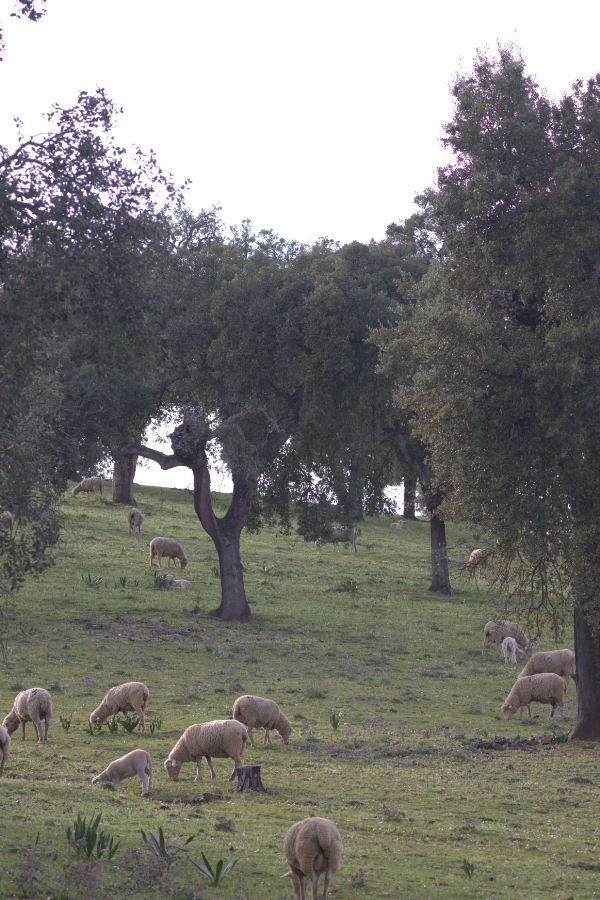
by Vandendriessche, Jari (2024) https://www.doi.org/10.5281/zenodo.13835078
Further west, pilot programs in Portugal’s mountainous interior deployed herds of native mountain goats (Cabra Jarmelista) equipped with virtual fencing collars. The goats target dense brooms and gorse brush, maintaining open mosaic corridors that protect vulnerable mountain villages while preserving endangered indigenous livestock breeds.
In the mountainous interior of Abruzzo in Central Italy, traditional seasonal livestock movement (transumanza – Italian for ‘transhumance’)—recognised by UNESCO as Intangible Cultural Heritage—is being leveraged for modern climate resilience. Traditional local sheep breeds graze high-altitude forest edges and shrublands. Lamb produced from eligible breeds in the region can be marketed under the Protected Geographical Indication (PGI) Agnello del Centro Italia, provided that the relevant production requirements are met. Coupled with the widespread use of traditional Maremmano-Abruzzese Livestock Guardian Dogs (Cani da Presa/Pastore Abruzzese), these herds manage biomass and maintain open forest edges safely alongside native wolf populations.
The way forward
Targeted forest grazing is far from a drop in the ocean. When integrated into regional landscape planning, it is one of the most scalable, cost-effective, and ecologically sound fire prevention strategies available today. However, transitioning from isolated success stories to systemic European practice requires a shift in both policy and education.
To turn livestock into effective lifesavers, EU member states must start by modernising their outdated national forest codes that fail to distinguish between destructive unmanaged grazing and beneficial, fire-preventative silvopasture. Equally important is investing in shepherding infrastructure—supporting pastoralists with training in modern tools like virtual fencing and predator defense, while compensating them fairly for the vital ecosystem services they provide. Above all, adopting a true One Health mindset means recognising that protecting human settlements from megafires cannot be detached from animal welfare, shepherd livelihoods, and forest biodiversity. By bringing trained shepherds and well-managed herds back into our forests, we don’t just clear fine fuels—we restore living, resilient ecosystems capable of thriving in a changing climate.
HALE does not intend to reinvent the wheel; in the coming two years, our aim is to develop the first integrated curriculum which builds on previous efforts in the area of agroforestry and animal welfare to train a future generation of practitioners, farm advisors or generalists which will strengthen their expertise in an interdisciplinary context. Past efforts, developed in the framework of the FIRE RES (Horizon 2020), Shep4eco (Erasmus+) and ShepForBio (LIFE) will serve as complementary knowledge hubs and will amplify the contribution of HALE to impactful actions on the ground.